
MLPOINT

Event ops proof page

The revenue leak starts after the event request.

The buyer sees one simple enquiry. Your team has to manage quote, date hold, deposit, guest details, staff readiness, delivery, and follow-up. This sample shows the operating layer MLPOINT maps before building.

Buyer seesOne simple event request
Team carriesOwner, quote, hold, deposit, guests, staff, prep
MLPOINT mapsThe internal event record behind the booking
Blueprint decidesBuild, clarify, defer, or stop before larger spend

What the teardown becomes

An event request should become an operating record.

The teardown is useful only if it can turn into a screen your team would trust during a real paid event. This representative screen shows the first useful build surface: queue, request state, blockers, and next action.

Response speedOwner + quote state visible

No request waits while the team reconstructs context.

Hold controlDeposit + expiry linked

Revenue risk is visible before the date is lost.

Delivery readinessGuest details + staff brief tracked

Missing requirements surface before event day.

Repeat revenueFollow-up owner scheduled

Happy buyers do not disappear into memory.

First operating screenRequest record + owner queue + blockers + next action
Sample build
QueueRecordBlockersFollow-up
$4.8kRevenue at risk
18hHold expires
2dResponse age
3Blockers
Selected record

Corporate cooking class

Northstar Finance

Quote sent
Captured
Scoped
Quoted
Deposit
Brief
QuoteSent

Package and terms visible

Hold18h left

Tentative slot protected

DepositMissing

Payment link is next

BriefBlocked

Needs dietary owner

Owner
Priya
Source
Website form
Date hold
Friday 5:00 PM
Guests
35
Estimated value
$4.8k
Package
Private culinary team event
Next actionConfirm deposit path
Owner memory removed
Who owns this?Was the quote sent?What blocks delivery?
Activity

Today 10:20Quote sent with package options.

YesterdayHold created for requested Thursday slot.

2 days agoPriya qualified group size and format.

Readiness

DoneOwner set

DoneQuote sent

OpenDeposit path

OpenGuest notes owner

First 30-day build shipsOwner queueRequest recordBlocker panelNext-action queue
Defer until signal is provenPublic booking rebuildAdvanced automationAnalytics dashboard

The first 30-day build can ship this operating screen before rebuilding the public booking flow.

01

Workflow map

Where the request moves, who owns each state, and where revenue or delivery risk appears.

02

Operating screen

The queue, request record, blockers, and next actions operators would actually use.

03

Build decision

Whether to build the first screen, clarify the workflow, defer automation, or stop.

Representative sample, not client performance data. A real Blueprint replaces this with your workflow, public signals, request states, and first-build recommendation.

60-second scan

Six event ops leaks worth inspecting before software spend.

A booking form is the visible front door. The expensive work sits behind it: ownership, holds, payments, requirements, staff readiness, and repeat follow-up.

The first move is not a giant rebuild.The $99 Blueprint maps the event record, names the blockers, and decides whether a focused build is worth doing.See the Event Ops path

Business comic story

The event that looked simple.

This fictional comic is not entertainment-first. It is a short business story showing why paid event work needs shared operating state across sales, availability, pricing, payment, delivery, and follow-up.
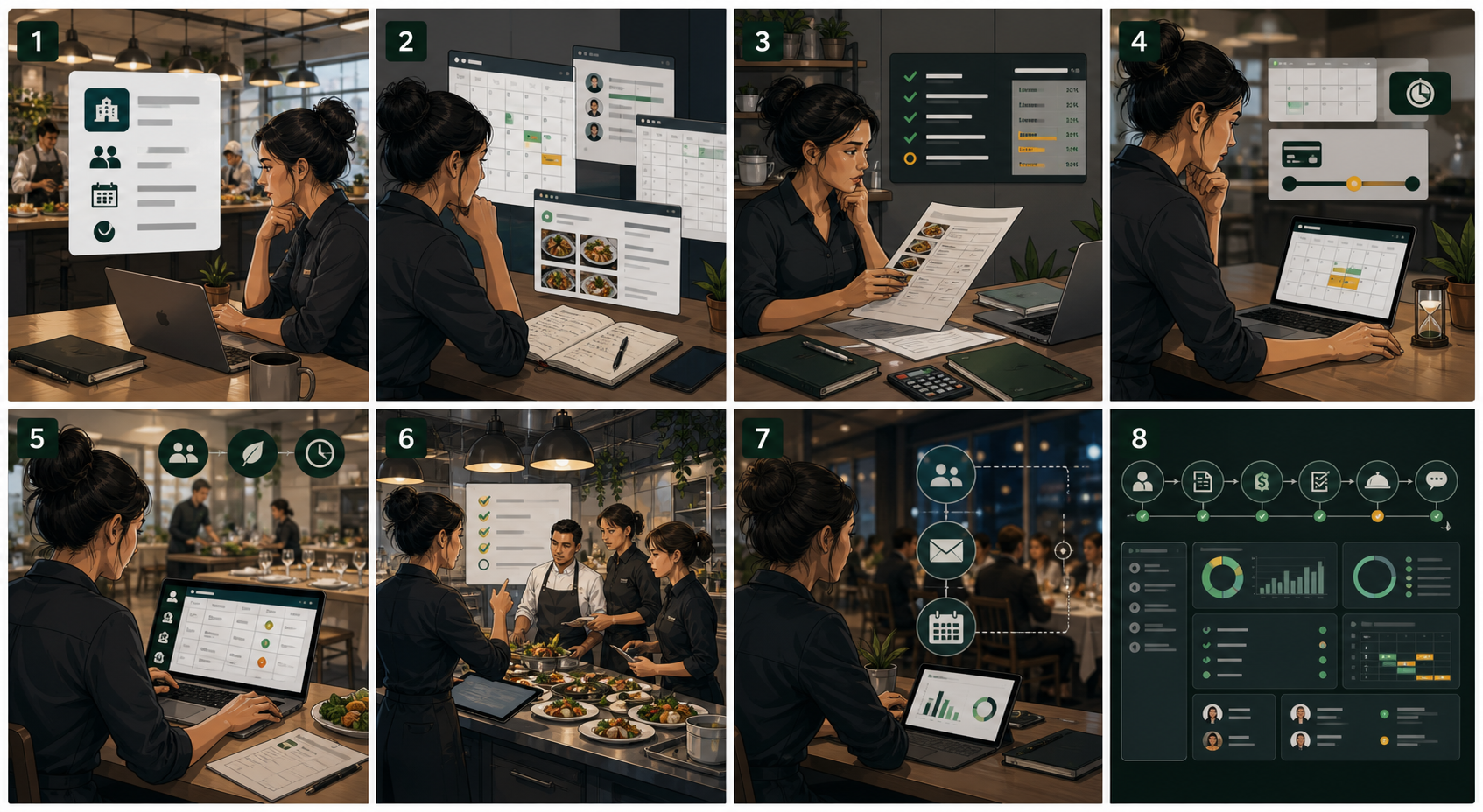
Eight-panel editorial comic showing a culinary event lead managing enquiry, availability, quote, date hold, guest details, delivery, follow-up risk, and a final operations dashboard.
Fictional visual story with editable on-page scene headers. On small screens, swipe the comic and use the scene notes below for the full breakdown.
Scene 01
Inbox35 guestsNext Thursday

Looks simple enough.

The enquiry

Insight: The sale starts as one clean message, but the operation begins immediately.

Hidden state: Enquiry owner

Scene 02
CalendarChef availabilityMenu notesPrice sheet

Date is open, but who checks staffing?

The invisible split

Insight: The buyer sees one request. The team has to reconcile several systems.

Hidden state: Fit check

Scene 03
Package priceDeposit termsHold expiry

Did we send the latest package?

The quote chase

Insight: Quote speed depends on operational state, not a prettier contact form.

Hidden state: Quote status

Scene 04
Tentative slotDeposit dueExpiry timer

Hold it, but do not lose the slot.

The date hold

Insight: Availability is not binary. A date can be open, held, deposit-pending, confirmed, or released.

Hidden state: Hold expiry

Scene 05
Final headcountDietary notesExecutive timing

New guest list just came in.

The late details

Insight: Event quality depends on the last version of the details, not the first version of the booking.

Hidden state: Delivery readiness

Scene 06
Staff briefPrep checklistRoom handoff

We pulled it together.

The event works

Insight: Manual coordination can make the day succeed while hiding how much operational effort it took.

Hidden state: Task ownership

Scene 07
Happy buyerNo reminderNext quarter

They loved it. Did anyone follow up?

The quiet leak

Insight: The event can be successful and still leak future revenue if follow-up has no owner.

Hidden state: Rebooking trigger

Scene 08
One event recordNext actionReady state

Now the team can see reality.

The operating record

Insight: MLPOINT should connect enquiry, quote, payment, prep, delivery, and follow-up into one operating state.

Hidden state: Workflow record

Visible event flow

A paid event typically passes through eight operational states.

01

Enquiry

Company, event type, guest count, preferred date, budget, location, and objective arrive through a form, email, or phone call.

02

Fit check

The team checks format, capacity, venue, instructor/chef availability, menu or project options, and constraints.

03

Quote

Pricing, inclusions, options, deposit terms, expiry, and the next step are packaged for the buyer.

04

Date hold

A requested slot may be tentatively held while the buyer confirms scope, budget, or payment.

05

Requirements

Guest details, dietary needs, accessibility notes, add-ons, company details, and final headcount are collected.

06

Assignment

An event owner, chef, instructor, facilitator, room, equipment, and materials are assigned.

07

Delivery

The final checklist, reminders, payment balance, venue handoff, staff brief, and last-minute changes are managed.

08

Follow-up

Feedback, photos, recipes/resources, invoice closeout, and repeat-client follow-up happen after delivery.

Likely handoffs

Where a team usually gains or loses time.

The goal is not to accuse the business of being messy. The goal is to show where operational state often becomes hard to see when events are run through inboxes, calendars, payment tools, and staff memory.

01

Enquiry ownership

Typical risk: Lead arrives, but the next owner or status may not be obvious.

Inspect: Can the team see who owns each event request and what happens next?

02

Quote and date hold

Typical risk: Proposal, availability, deposit, and expiry can live in different places.

Inspect: Can ops see quote status, tentative hold, and payment deadline together?

03

Guest requirements

Typical risk: Dietary notes, headcount, special requests, and add-ons often change late.

Inspect: Is there a controlled final-details checklist before event day?

04

Staff/event brief

Typical risk: Chef, instructor, or facilitator context may be spread across email and notes.

Inspect: Does the assigned staff member get one final event brief?

05

Payment state

Typical risk: Deposit, balance, invoice, and confirmation can be detached from operational readiness.

Inspect: Can the team see whether the event is paid enough to proceed?

06

Repeat follow-up

Typical risk: Corporate buyers are valuable, but follow-up can depend on memory.

Inspect: Is the next touch tracked after the event is delivered?

Business risk

The business case is response speed, delivery readiness, and repeat revenue.

Response delay

Corporate/private buyers compare options. If ownership and quote state are unclear, the team can lose high-value enquiries quietly.

Delivery mistakes

Dietary details, guest counts, add-ons, staff notes, and venue requirements are small details until one is missed.

Repeat-client leakage

The best event buyers often come back. If follow-up depends on memory, the relationship value leaks after delivery.

Recommended build

Start with the smallest operating build that protects revenue.

The first useful build is the internal event record between enquiry and delivery: status, ownership, requirements, payment state, prep, and follow-up.

Event intake dashboard

One internal place for enquiry, buyer, event type, date, headcount, route, and owner.

Status and date-hold tracker

States such as new, qualified, quoted, date held, deposit due, confirmed, prep, delivered, and follow-up.

Requirements checklist

Guest count, dietary notes, menu/project choices, accessibility, add-ons, and final-details deadline.

Staff event brief

A single operational brief for the chef, instructor, facilitator, host, or event owner.

Payment visibility

Deposit, balance, invoice, due date, and confirmation state beside the event record.

Post-event follow-up

Feedback, photos/resources, invoice closeout, and repeat-client reminder.

Teardown to build bridge

If this is your workflow, the first build usually creates the internal event record.

That means enquiry owner, quote status, date hold, payment state, guest requirements, staff brief, prep checklist, and follow-up before any public booking rebuild.

Not another booking widget

The first build should expose the event record behind the booking.

If the page only talks about bookings, serious buyers may assume MLPOINT only builds reservation tools. This sample keeps the emphasis on event status, staff readiness, payment state, and follow-up.

What the buyer sees

Booking surface

A form, email, phone call, package page, calendar request, or payment link.

What the team needs

Operating state

Owner, fit check, quote version, date hold, payment state, guest details, prep, and follow-up.

What MLPOINT should ship first

First useful build

A lightweight event record that makes the work inspectable before rebuilding the public journey.

Include first

The event operations record

Event status, owner, quote/date hold, requirements, payment state, staff brief, prep checklist, reminders, and follow-up.

Avoid first

The giant rebuild

Full CRM migration, native app, public marketplace, advanced analytics, or a complete website rebuild before the workflow is proven.

Buyer question

Where is reality closest?

Enquiry ownership, quote/date status, guest requirements, staff/event prep, payment state, or repeat-client follow-up?

Discovery questions

Questions MLPOINT would ask before proposing a build.

  • Where does a new private or corporate event enquiry go first?
  • Who owns the enquiry after it arrives?
  • How do you track quote, date hold, deposit, and confirmation status?
  • Where do guest requirements and special notes live?
  • How does the assigned staff member get the final event brief?
  • Which event detail, if missed, creates the most pain?
  • Do corporate/private clients repeat, and how is follow-up handled?
  • How many events can be in flight at the same time?

Your operation

Want this mapped for your actual event workflow?

Send the event flow that is currently handled through forms, email, spreadsheets, payment links, calendars, and staff notes. MLPOINT will look for the first useful operating screen.

Best fit

Paid event, class, private booking, workshop, venue, training, or group-experience businesses where enquiry-to-delivery work has outgrown informal tracking.

Request an operations blueprintView the Event Ops path